AI-Focused Faculty Lightning Talks
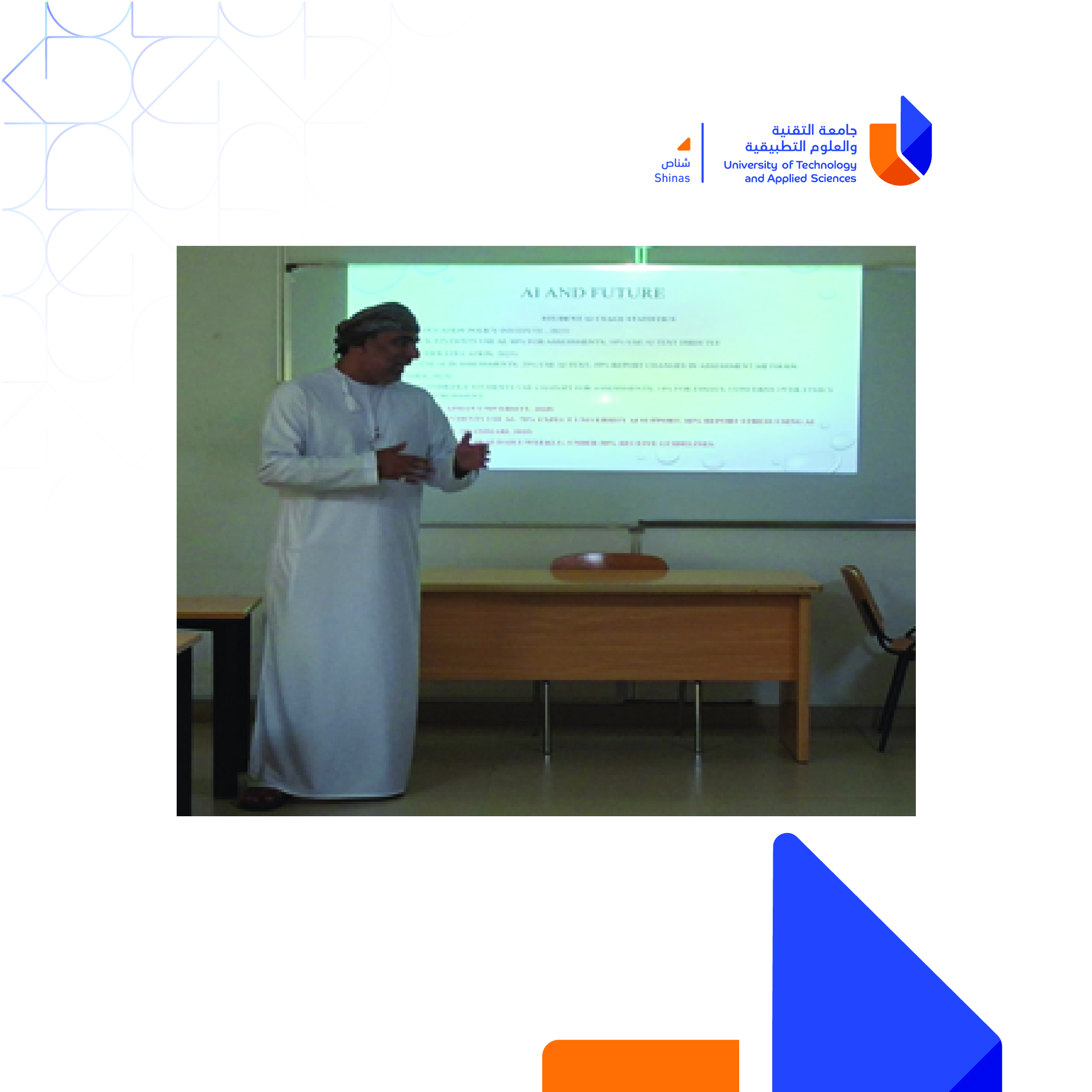
The Department of Economics & Business Administration at UTAS Shinas successfully marked Academic Integrity Day with an insightful and forward-looking Faculty Lightning Talk Series, organized by the Staff Professional Development Committee (SPDC). Held on Monday, September 1, 2025, in Room D005 from 11:00 AM to 1:00 PM, the event brought together faculty members and academic leaders to explore the evolving landscape of academic integrity in an era shaped by artificial intelligence (AI).
The two-hour program featured a sequence of 15–20-minute lightning talks delivered by distinguished faculty members, each addressing key issues at the intersection of integrity, innovation, and instructional practice.
Setting the Tone for Integrity in Modern Academia
The SPDC opened the event by emphasizing the urgent need to safeguard academic integrity amid rising technological advancements. As AI transforms how students access, process, and produce information, the committee highlighted the importance of upholding honesty, trust, fairness, and responsibility across all academic environments.
Spotlight on Faculty Speakers
The event showcased four engaging and thought-provoking presentations:
• Dr. Renjith Krishnan K – “Holistic Strategy for Promoting Integrity”
Dr. Renjith underscored the need for comprehensive institutional policies that support a culture of integrity. He emphasized embedding ethical practices into curriculum design, assessment methods, and campus-wide processes to ensure long-term sustainability.
• Dr. Cirilo E. Mirano Jr. – “Reinforcing Teacher-Led Class in an AI-Dependent Learning Environment”
Dr. Mirano highlighted the growing reliance on AI tools in education and stressed the irreplaceable role of teachers in fostering genuine learning. He discussed strategies for ensuring AI serves as a complement—not a substitute—to human-led instruction.
• Dr. Mohammed Hassan Kalati – “AI and the Future: New Horizons of AI in Academia”
Dr. Kalati explored the transformative potential of AI in personalizing learning and enhancing research. While acknowledging these opportunities, he warned of ethical risks such as plagiarism, data privacy violations, and improper use of AI applications.
• Dr. Khudaija Sultana – “Guiding the Next Generation: Supervising Student Assignments in the AI Era”
Dr. Khudaija emphasized the importance of clear supervision, innovative assessments, and mentorship approaches that encourage originality. She noted that while AI tools can aid learning, faculty oversight is essential to nurture critical thinking and intellectual honesty.
A Shared Vision for Ethical and Intelligent Education
Across all presentations, a unifying theme emerged: higher education must balance AI’s vast opportunities with the responsibility to protect academic integrity. Speakers collectively emphasized that while AI can enhance efficiency and personalization, it must be used thoughtfully to preserve authenticity in student learning and faculty scholarship.
Interactive Discussions and Key Insights
The audience—composed of faculty and staff—actively participated through questions, reflections, and open discussions. Key insights included:
• The importance of developing institutional frameworks for responsible AI use.
• Strengthening digital literacy among students and educators.
• Revising assessment strategies to ensure originality and reduce overreliance on AI tools.
• Promoting collaboration among faculty, administrators, and policymakers to sustain academic values.
Conclusion: Integrity at the Heart of Innovation
In concluding remarks, the SPDC thanked all speakers and participants for their meaningful contributions. The committee reaffirmed its commitment to supporting faculty through professional development initiatives that respond to emerging challenges.
The Academic Integrity Day & Faculty Lightning Talk Series was widely praised as timely, relevant, and impactful—successfully reinforcing the message that as AI reshapes the educational landscape, academic integrity must remain central to the mission of UTAS Shinas and the Department of Economics & Business Administration.
The event ended with a shared purpose: to uphold integrity, embrace innovation responsibly, and prepare students for success in an AI-driven future.
440