UTAS Shinas Hosts IMRC 2026, Strengthening Global Research Collaboration
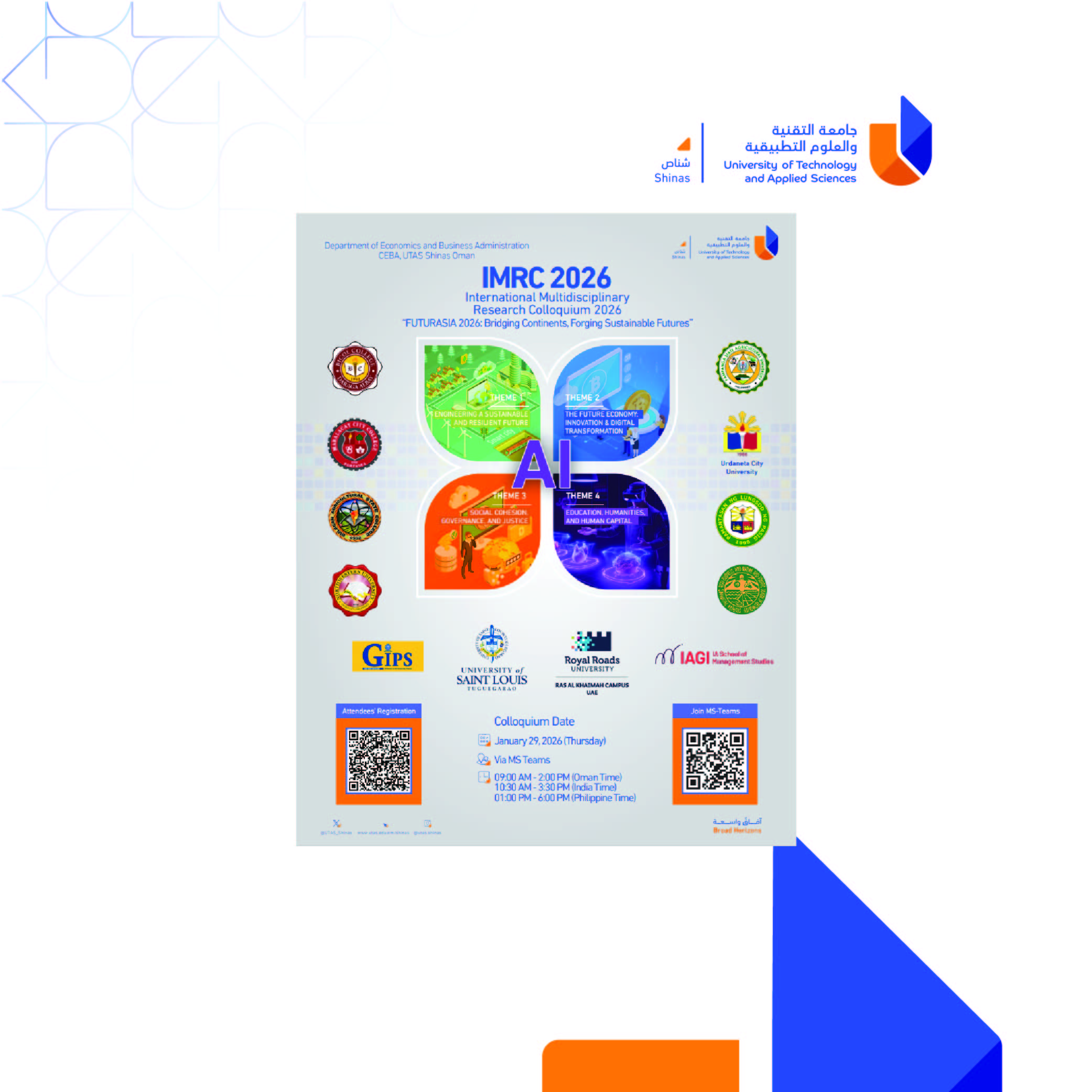
The Department of Economics and Business Administration (CEBA) at University of Technology and Applied Sciences – Shinas successfully organized the International Multidisciplinary Research Colloquium (IMRC) 2026 on January 29, 2026, in collaboration with 13 international partner institutions. Conducted virtually under the theme “FUTURASIA 2026: Bridging Continents, Forging Sustainable Futures,” the event aimed to foster multidisciplinary research collaboration and address global challenges through innovation, sustainability, governance, and education.
The colloquium received an impressive 200 research abstracts, reflecting strong international academic interest and engagement. More than 1,000 registered participants, including scholars, researchers, faculty members, and graduate students from higher education institutions across the globe, took part in the event. The research presentations were organized into parallel sessions covering four major thematic areas: Engineering a Sustainable and Resilient Future; The Future Economy through Innovation and Digital Transformation; Social Cohesion, Governance, and Justice; and Education, Humanities, and Human Capital.
A wide range of disciplines were represented, including engineering, technology and artificial intelligence, business and economics, education, health sciences, social sciences, and environmental sustainability. The sessions were effectively moderated by academic experts from UTAS Shinas and partner institutions, ensuring high-quality scholarly discussions and meaningful knowledge exchange.
Several outstanding research works were recognized with Best Paper Awards, highlighting the academic rigor, originality, and relevance of the studies presented. These recognitions underscored IMRC 2026’s commitment to promoting excellence in multidisciplinary research.
The successful implementation of IMRC 2026 marked a significant achievement for UTAS Shinas in strengthening international academic partnerships and cultivating a vibrant research culture. By bringing together thirteen collaborating institutions and a large global academic community, the colloquium contributed to advancing sustainable development-oriented research and long-term scholarly collaboration.
Organizers expressed their intention to further expand future editions of IMRC by increasing joint research initiatives, introducing interactive workshops, and strengthening cross-institutional collaborations. With the strong participation and positive outcomes of IMRC 2026, UTAS Shinas continues to position itself as a leading platform for international multidisciplinary research and global academic engagement.