CEBA, UTAS–Shinas Conducts International Knowledge and Learning Series – Series 2 on Digital Pedagogy and E-Content Development
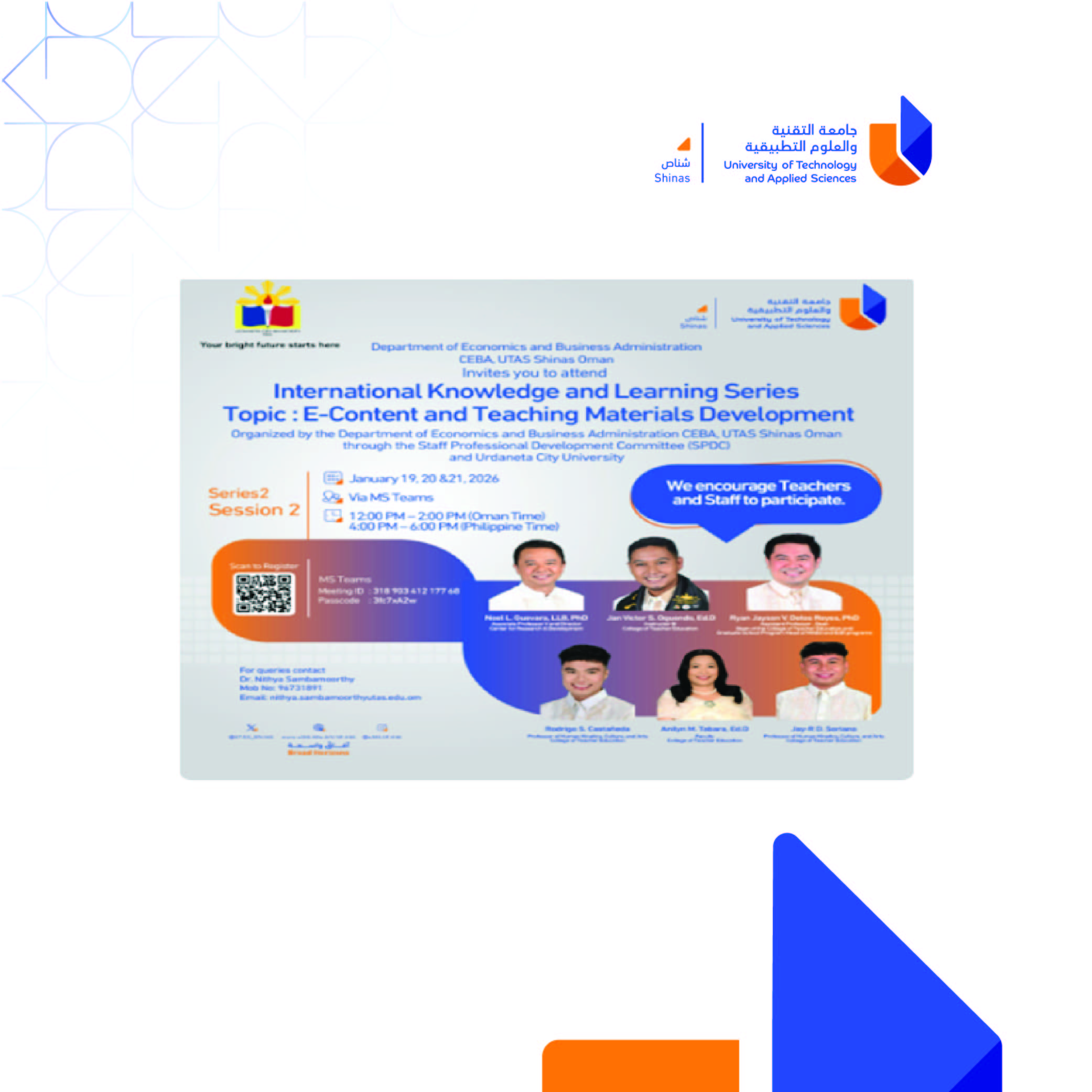
The Department of Economics and Business Administration (CEBA) at the University of Technology and Applied Sciences (UTAS)–Shinas, in collaboration with Urdaneta City University through the Staff Professional Development Committee (SPDC), successfully conducted the International Knowledge and Learning Series Workshops – Series 2 from 19 to 21 January 2026. The three-day online program focused on enhancing faculty competencies in digital pedagogy, innovative teaching practices, and the development of high-quality e-content and teaching materials.
The workshop series was organized as part of CEBA’s strategic initiatives to strengthen digital literacy and promote the effective use of educational technologies among academic stakeholders. It aimed to equip educators with practical tools and pedagogical approaches aligned with contemporary educational standards, supporting UTAS’s strategic goals on professional development and teaching innovation.
Distinguished resource persons from partner institutions facilitated the sessions, including Jay-R D. Soriano, who discussed innovative strategies in e-content development; Rodrigo S. Castañeda, who presented on designing engaging digital learning materials; Anilyn M. Tabara, Ed.D, who shared pedagogical approaches for effective e-learning; Ryan Jayson V. Delos Reyes, PhD, who highlighted technology-enhanced teaching and assessment; and Jan Victor S. Oquendo, Ed.D, who provided best practices in developing teaching materials for higher education.
A total of 29 staff and community participants attended the workshops over the three days. Post-event feedback from 26 respondents reflected very high levels of satisfaction in terms of content relevance, speaker effectiveness, and practical applicability. Participants noted that the sessions significantly enhanced their confidence and skills in creating digital teaching resources and implementing innovative instructional strategies.
The online sessions were conducted smoothly without any major technical challenges, enabling active participation and interactive discussions throughout the program. Key strengths of the event included the expertise of the facilitators, practice-oriented topics, and the effective use of the online platform to reach a wider audience.
Building on the success of the workshop series, CEBA plans to organize future professional development programs incorporating hands-on activities, live demonstrations, and advanced training on specialized e-content tools and digital assessment methods. These initiatives aim to further support continuous faculty development and enhance the quality of teaching and learning at UTAS.