Report on AI-Powered IoT Data Analytics for Smarter Decision Making
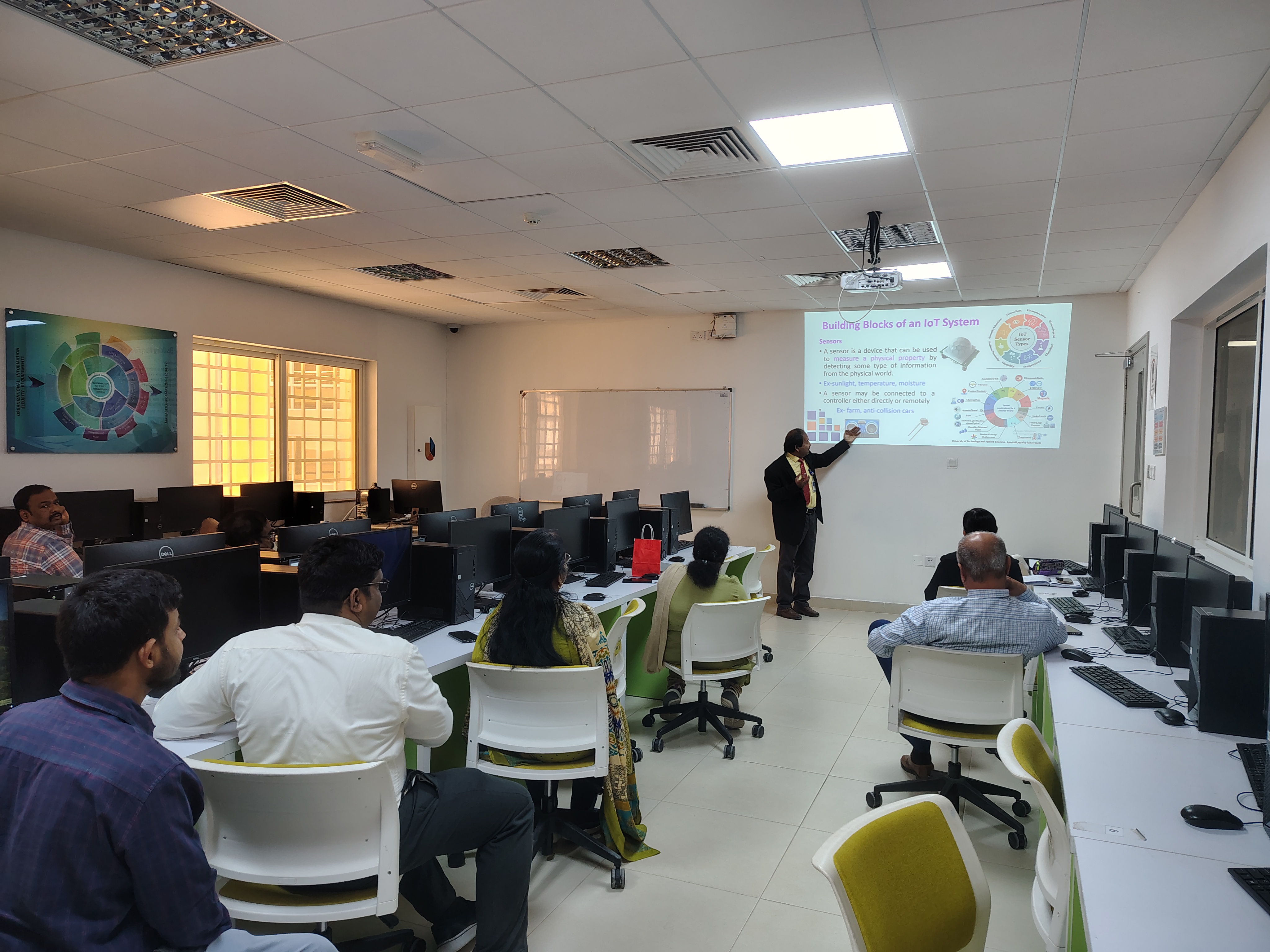
PDC-DCIS Hosts Workshop on AI-Powered IoT Data Analytics for Smarter Decision Making The Professional Development Committee at the University of Technology and Applied Sciences (UTAS) – Nizwa organized a specialized training workshop titled “AI-Powered IoT Data Analytics for Smarter Decision Making” on Tuesday, March 10, 2026, from 12:00 PM to 1:30 PM at UTAS–Nizwa. The session was conducted under the Creativity & Innovation training category as part of the university’s continuous professional development initiatives.
The workshop was delivered by Dr. Jehan Murugadhas, a Networking and E-Security specialist with more than 25 years of teaching and research experience. Dr. Murugadhas has extensive expertise in Mobile Ad Hoc Networks, Internet of Things (IoT), disaster recovery, and secure e-commerce systems, and has mentored several IoT-based startup projects and smart research applications. Over the years, he has trained more than 25,000 professionals globally and contributed to numerous workshops, conferences, and academic programs in the field of emerging technologies.
During the session, participants explored how Artificial Intelligence (AI) can be integrated with Internet of Things (IoT) technologies to transform raw sensor data into meaningful insights for decision-making. IoT devices generate massive volumes of real-time data from sensors and connected systems, and AI techniques such as machine learning, deep learning, and predictive analytics can analyze these data streams to detect patterns, forecast trends, and automate intelligent responses.
The workshop highlighted key concepts including real-time monitoring, predictive analytics, and intelligent decision support systems. Participants learned how AI-driven analytics can process large IoT datasets to identify anomalies, optimize operational processes, and predict future events or system failures. Such technologies are increasingly used across sectors such as healthcare, smart cities, manufacturing, agriculture, and transportation to enhance efficiency, safety, and sustainability.
Through interactive discussions and examples from real-world IoT projects including smart agriculture, smart home automation, and intelligent infrastructure systems the workshop demonstrated how AI-powered IoT solutions can support data-driven decision making and automation in modern digital environments. Participants gained insights into applying machine learning models to IoT datasets and understanding how predictive analytics can improve operational efficiency and reduce costs.
The session concluded with active participation from faculty members. The workshop further strengthened UTAS–Nizwa’s commitment to advancing emerging technologies, fostering innovation, and equipping faculty with the skills required to integrate AI and IoT technologies into teaching, research, and industry-focused applications.
Writeup by: Dr. Sonia Victor Soans
193