Workshop Completion Report Hands-on Workshop on Efficiency and Productivity Analysis Using MAXDEA
Date: 13 April 2026
Time: 8:00 AM – 9:00 AM
Venue: BS 132
Facilitators: Dr. Shakeb Akhtar and Mr. Venancio
Number of Participants: 24
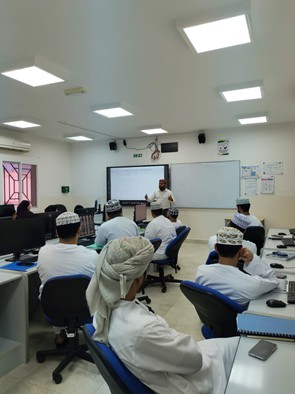
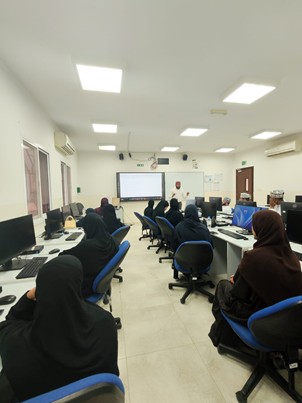
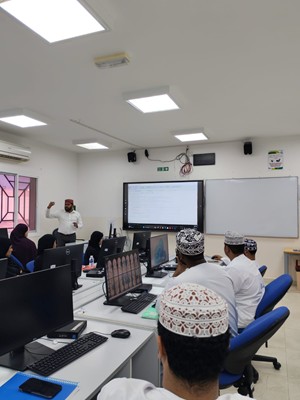
On 13 April 2026, a hands-on workshop titled ‘Hands-on Workshop on Efficiency and Productivity Analysis Using MAXDEA’ was successfully conducted from 8:00 AM to 9:00 AM in Room BS 132. The workshop was jointly facilitated by Dr. Shakeb Akhtar and Mr. Venancio, and was attended by 24 participants, including postgraduate students, research scholars, and faculty members. The primary objective of the workshop was to provide participants with both conceptual understanding and practical skills in efficiency and productivity analysis using the MAXDEA software, a specialized tool widely used for efficiency measurement and productivity analysis. The session was designed to bridge the gap between theoretical knowledge and practical application by providing hands-on experience with real-world analytical techniques.
The workshop began with an introduction to the fundamental concepts of efficiency and productivity, highlighting their importance in decision-making across various sectors such as banking, healthcare, education, manufacturing, and public services. Participants were introduced to the basics of Data Envelopment Analysis (DEA), including the concepts of Decision-Making Units (DMUs), input- and output-oriented models, and returns to scale assumptions. The facilitators then provided an in-depth explanation of key DEA models implemented in MAXDEA, including CCR, BCC, Slack-Based Measure (SBM), and super-efficiency models, along with a discussion on scale efficiency and performance benchmarking.
A significant part of the workshop was dedicated to productivity analysis, with a focus on the Malmquist Productivity Index and its decomposition into efficiency change and technological change. Participants were guided through the practical implementation of DEA and productivity models using MAXDEA, including data preparation, model selection, execution, interpretation of results, and exporting outputs for further analysis and publication. The hands-on nature of the session enabled participants to gain direct experience with the software, enhancing their understanding of efficiency measurement and productivity evaluation.
The workshop employed a blend of conceptual lectures, live demonstrations, practical exercises using real datasets, case-based discussions, and interactive Q&A sessions. This approach ensured active engagement and facilitated a deeper understanding of both theoretical concepts and practical applications. By the end of the workshop, participants were equipped with the skills to apply DEA models for efficiency measurement, conduct productivity analysis using the Malmquist Index, interpret results effectively, and utilize MAXDEA for academic research, benchmarking, and policy-oriented studies. Overall, the workshop successfully achieved its objectives by enhancing participants’ analytical capabilities and contributing to the development of applied research skills in efficiency and productivity analysis.
183